Cities
Mogao Caves tickets: regular, emergency, and English tours, booking with a passport, and getting there
Mogao Caves tickets cost ¥238 for 8 caves and a film, or ¥258 with an English guide. How foreigners book with a passport, emergency tickets, winter prices, and Dunhuang.
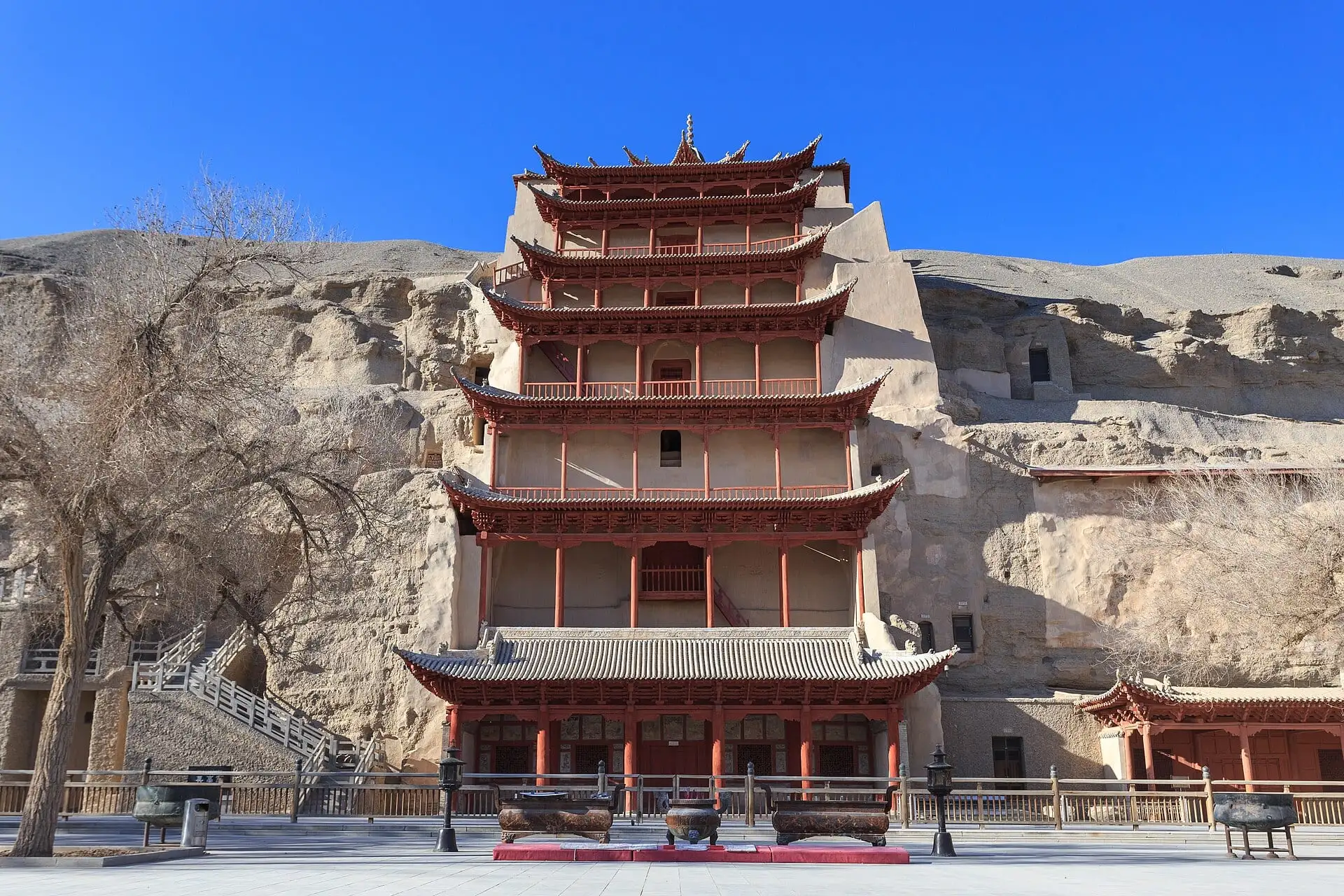
The Mogao Caves, outside Dunhuang in Gansu province, are some of the greatest treasures of Buddhist art anywhere: more than 700 caves cut into a desert cliff on the Silk Road between the 4th and 14th centuries, with about 45,000 square metres of murals and 2,000 painted sculptures. To protect them, visits are limited, timed, and guided, and you only see a handful of caves. Here’s which ticket to buy, how foreigners book, and how the visit works.
The short version
- The regular ticket (¥238 from April to November) covers two films at the visitor centre and 8 caves with a guide. With an English-speaking guide it costs ¥258.
- Book in the “莫高窟参观预约网” WeChat account, which has an English Ticket Booking option for foreign passports. Book as early as you can for summer: the 6,000 regular tickets a day sell out.
- If they’re gone, the cheaper emergency ticket (¥100, 4 caves, no films) is sold on the busiest days.
- Everything starts at the Mogao Caves Digital Exhibition Center, not at the caves: arrive 30 minutes before your time slot with your passport.
Tickets and prices
| Ticket | April to November | December to March | What’s included |
|---|---|---|---|
| Regular, Chinese guide | ¥238 | ¥140 | Two films at the visitor centre, the shuttle bus, 8 caves (10 in winter) |
| Regular, foreign-language guide | ¥258 | ¥160 | The same, with an English (or other language) guide |
| Emergency | ¥100 | Not sold | 4 caves, the shuttle bus, no films |
These are the Dunhuang Academy’s published prices. The foreign-language prices come from China’s official tourism site: ¥180 for the caves, ¥48 for the films, ¥10 for the shuttle bus, and ¥20 for the foreign-language guide.
Discounts are for Chinese citizens only. The academy’s rules list Chinese ID documents, not foreign passports, and foreign student cards aren’t accepted. Children under 4 enter free.
Winter: from 1 December to 31 March the regular ticket shows 10 caves instead of 8, at the lower price. Last winter Dunhuang also halved the prices of its other big sights. The 2026–27 winter offers hadn’t been announced yet in late October.
Special caves: after your regular visit you can pay extra to see one of 14 famous caves that are usually closed, such as Cave 45 (Tang sculptures), Cave 220, and Cave 275, the oldest. Places are limited, and you arrange it at the special-cave desk at the cliff on the day. The academy doesn’t publish the prices: travellers report ¥150 to ¥500 a cave.
How to book
- Officially: follow the “莫高窟参观预约网” WeChat service account, open 预约购票 (booking), and choose Ticket Booking, the option for foreign passports and Hong Kong, Macao, and Taiwan travel permits. There’s also a WeChat mini-program with the same name. Bookings open from 7:00 to 22:00 each day. You can’t book by phone.
- The name and passport number must match. The tickets are real-name, and you show your passport at each check.
- How far ahead: travellers report that bookings open 30 days ahead. For July, August, and the October holiday, book on the first day you can.
- Agents: the academy says it hasn’t authorised anyone else to sell tickets. Tour operators can book group visits, though: Klook’s private day tour includes the Mogao Caves and the Mingsha sand dunes, and KKday’s day tour has an English-speaking guide and an option for the Mogao tickets alone. Check the ticket is included.
Emergency tickets: on the busiest summer days, once the regular tickets run out, the caves switch to “emergency mode” and sell up to 12,000 emergency tickets a day. There’s no fixed calendar: in 2026 it started in July. You see fewer caves and no films, but it’s far better than missing Mogao altogether.
Refunds: if the caves close for heavy rain or sandstorms, unused tickets are refunded in full. That happened twice in summer 2026.
How the visit works
- The Digital Exhibition Center (数字展示中心, 8899 Yangguan East Road), on the edge of Dunhuang. Collect your ticket slip at a window or machine if your booking asks you to, and go through the check 30 minutes before your slot.
- Two films, about 40 minutes in all: one on the history of Dunhuang and the Silk Road, and a dome-screen film taking you through some of the caves you won’t see.
- The shuttle bus to the cliff, about 15 minutes.
- The caves with a guide, in a small group: about 60 to 90 minutes for 8 caves. Which caves you see depends on the day: they rotate them to protect the paintings. Tours often include the famous Nine-Storey Building (Cave 96), with its 35 m seated Buddha.
Allow about 4 hours in all. You can visit the small Mogao Caves Exhibition Center at the cliff afterwards, with full-size replicas of some closed caves.
Rules:
- No photos or videos inside the caves. You can take photos of the cliff outside.
- Suitcases, bags of 20 inches or more, pets, and drones aren’t allowed at the caves. The visitor centre has free lockers.
- The caves are dim. A small torch can help, but ask your guide before using it.
Opening hours
| Season | Hours | Last ticket check |
|---|---|---|
| 1 April to 30 November | 8:00 to 18:00 | 16:10 |
| 1 December to 31 March | 9:00 to 17:00 | 15:10 |
The caves close in heavy rain and sandstorms, which are rare but happen in summer. The ticket hotline is 400-8333-715 (8:30 to 16:30, Chinese).
Getting there
- To the visitor centre: the academy puts it about 9 km from the city centre, a short taxi or DiDi ride. City bus 12 goes there too, from opposite the Silk Road Yiyuan Hotel. There’s no parking at the caves themselves, and you can only reach them on the shuttle bus.
- By air: Dunhuang Mogao airport has flights from Beijing, Xi’an, Lanzhou, and other cities, more in summer.
- By train: Dunhuang station has fast D trains from Lanzhou and Jiayuguan and a long sleeper from Xi’an. On the main high-speed line, Liuyuan South station is about 2 hours’ drive from Dunhuang. See how to book trains.
The rest of Dunhuang
- Mingsha Shan and Crescent Lake (鸣沙山月牙泉): giant sand dunes with a spring-fed lake at their foot, on the edge of town. Tickets are about ¥110 in summer and valid for three days. Go for sunset, and ride a camel or a sand sled.
- Yumen Pass and Yangguan, the old Han dynasty gateways to the west, and the Yardang wind-carved landforms, about 180 km away in the desert. There’s no public transport: hire a car or join a tour.
- The night market in town, for lamb skewers and apricot juice.
Dunhuang is a long way from everywhere else, so most people fly in, or come by train after Xi’an and the Hexi Corridor. For more ideas, see the 10 to 14 day China itinerary and the best time to visit China: spring and autumn are best, as summer is hot and busy.