Planning
China in 7 days: four itineraries for a first trip
Beijing, Xi'an and Shanghai in a week, or a slower Beijing and Shanghai trip, Shanghai with Suzhou and Hangzhou, or Chengdu and Chongqing. Day by day, with train times.
A week is enough for a good first trip to China, as long as you don’t try to see everything. China’s high-speed trains make two or three cities easy; four is too many. Here are four routes, from the classic to the relaxed, and how to choose.
Which route fits you
| Route | Best for | Pace |
|---|---|---|
| 1. Beijing, Xi’an and Shanghai | The big sights: the Great Wall, the Forbidden City, the Terracotta Warriors | Busy |
| 2. Beijing and Shanghai | The same highlights minus Xi’an, with time to breathe | Relaxed |
| 3. Shanghai, Suzhou and Hangzhou | Flying in and out of Shanghai; gardens, lakes and water towns | Relaxed |
| 4. Chengdu and Chongqing | Pandas, spicy food and a dramatic mountain city | Medium |
Spending two weeks? See our 10- and 14-day itineraries.
Check your entry option first
- 30-day visa-free entry covers most of Europe, the UK, Canada, Australia, New Zealand, Japan and South Korea. Any of the routes works. The policy runs until 31 December 2026; an extension hadn’t been announced when we checked.
- US passports aren’t on that list. A week fits the 240-hour (10-day) visa-free transit, but only if you fly on to a third country or region, for example Shanghai → Tokyo or Hong Kong, not back to the US. See visiting China as a US citizen.
Full rules: visa-free entry and 240-hour transit.
Route 1: Beijing, Xi’an and Shanghai (the classic)
The most popular first trip, and the busiest. Fly into Beijing and out of Shanghai (“open-jaw” or “multi-city”): it usually costs about the same as a return ticket and saves a day of backtracking.
| Day | Where | What |
|---|---|---|
| 1 | Beijing | Arrive. Tiananmen Square at dusk, dinner in the hutongs around Nanluoguxiang |
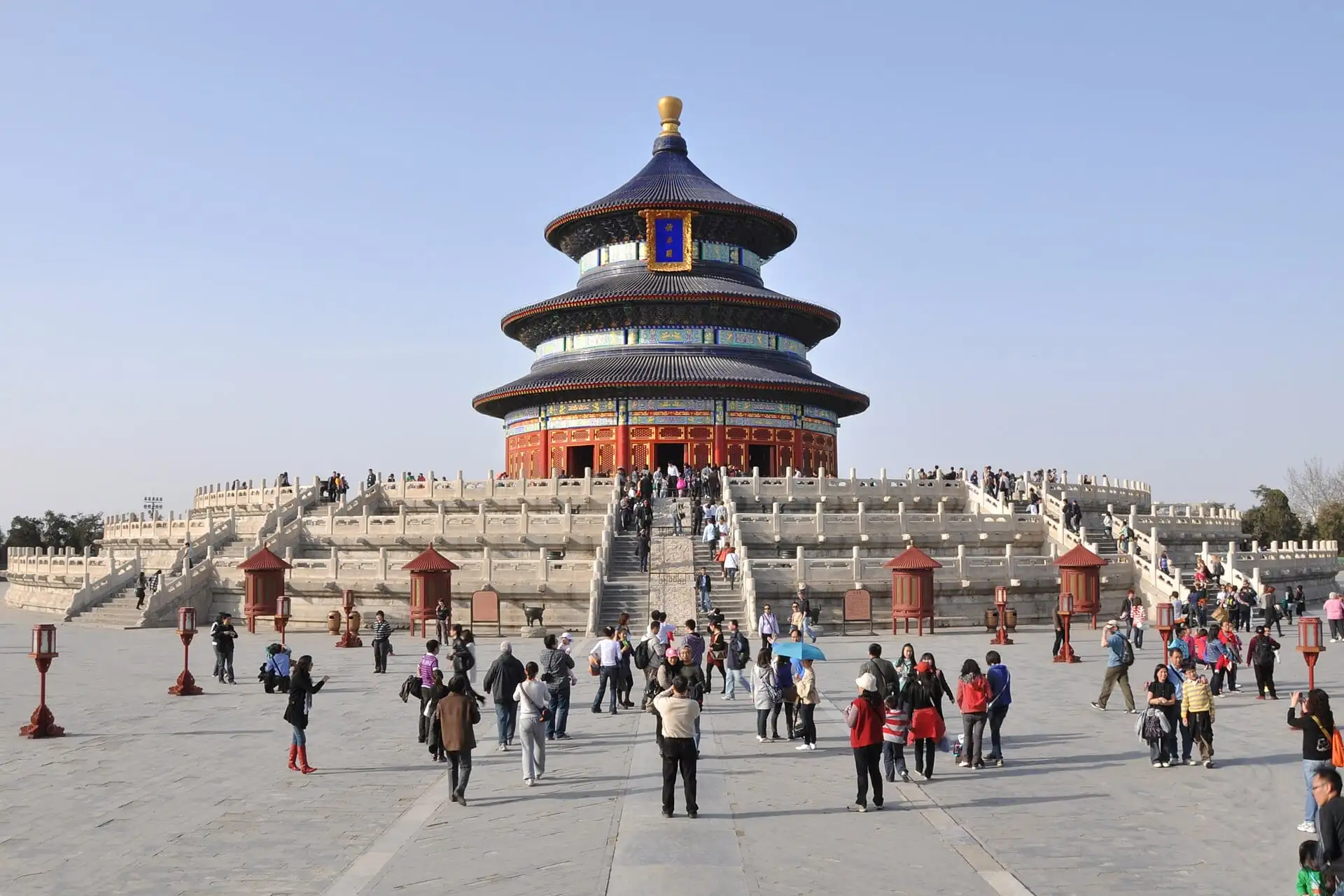
| 2 | Beijing | The Forbidden City, then the view from Jingshan Park; the Temple of Heaven in the afternoon |
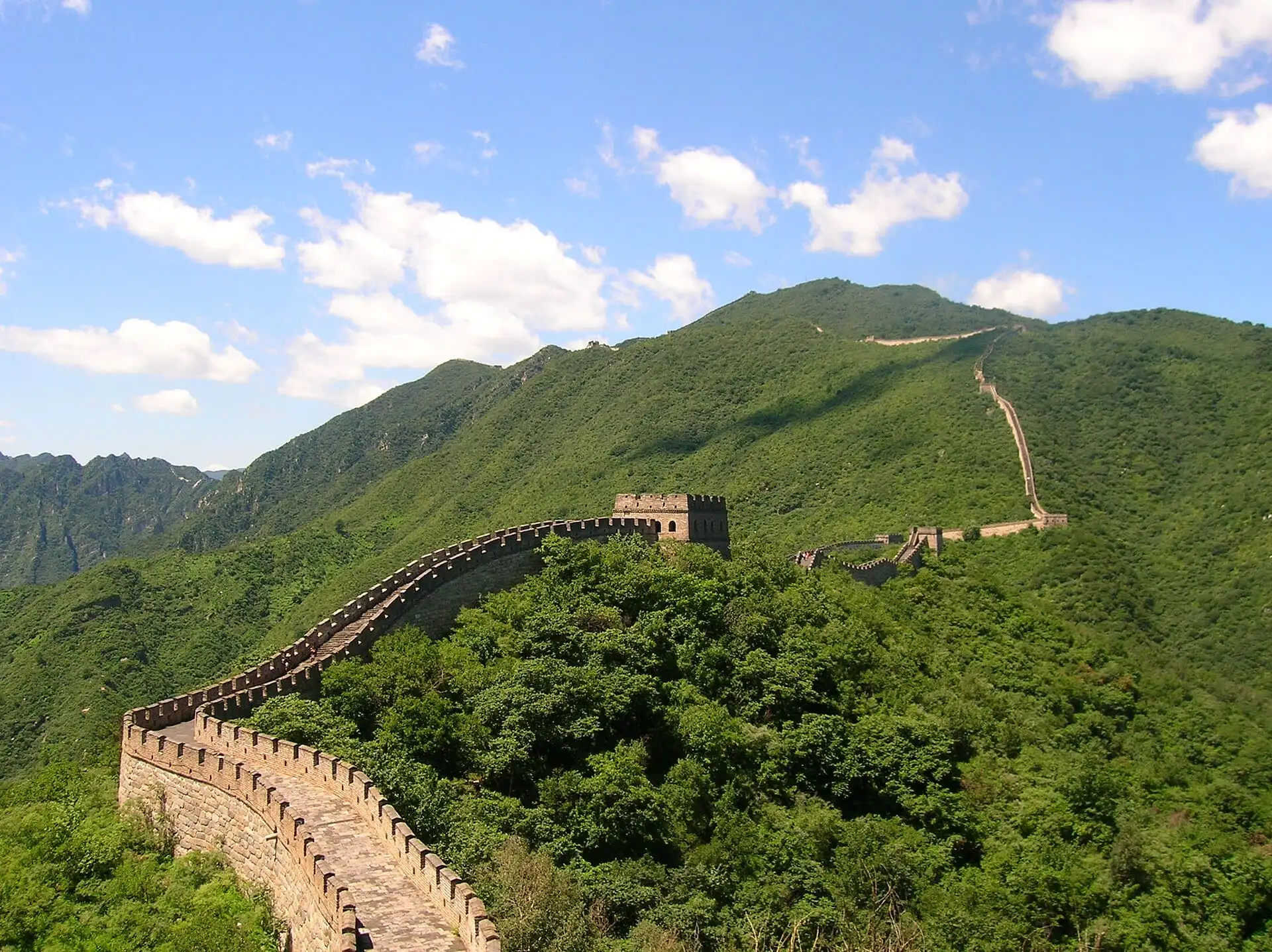
| 3 | Beijing | The Great Wall at Mutianyu; Peking duck in the evening |
| 4 | Xi’an | Morning train (4.5–6 hours). Walk the city wall at sunset, eat in the Muslim Quarter |
| 5 | Xi’an | The Terracotta Warriors, about an hour out of the city |
| 6 | Shanghai | Fly (about 2–2.5 hours) or train (about 6 hours). The Bund lit up at night |
| 7 | Shanghai | Yu Garden and the old town, the former French Concession; fly home |
Save a day with a sleeper train. Overnight “D” sleeper trains run between Beijing West and Xi’an, leaving about 20:30 and arriving about 08:30 (about ¥350–435 in a second-class berth). Take one on the night of day 3 and you get a full extra afternoon in Xi’an or Shanghai.
City by city: Beijing in 4 days, Xi’an in 2 days, Shanghai in 3 days.
Route 2: Beijing and Shanghai (more relaxed)
Drop Xi’an and you get time for the places in between the big sights, and one easy train ride instead of two.
| Day | Where | What |
|---|---|---|
| 1 | Beijing | Arrive. Tiananmen Square, the hutongs |
| 2 | Beijing | The Forbidden City and Jingshan Park |
| 3 | Beijing | The Great Wall at Mutianyu |
| 4 | Beijing | The Temple of Heaven and the Summer Palace |
| 5 | Shanghai | High-speed train, 4 hours 18 minutes on the fastest trains. The Bund at night |
| 6 | Shanghai | Day trip to Suzhou (25 minutes by train) or Hangzhou (about 45–60 minutes) |
| 7 | Shanghai | Yu Garden, the French Concession; fly home |
The Beijing–Shanghai train: about ¥550–680 in second class, depending on the train. The operator raised its maximum fares in May 2026, but the fares charged on most trains barely changed at first. Pick a train under 5 hours: the slow ones take 6 hours or more.
Day trips: Suzhou’s gardens or Hangzhou and West Lake.
Route 3: Shanghai, Suzhou and Hangzhou
The easiest week in China: one airport, short train rides, and some of the country’s prettiest scenery. Good in spring, for travellers with children or parents, or as a second trip.
| Day | Where | What |
|---|---|---|
| 1 | Shanghai | Arrive. The Bund and Nanjing Road at night |
| 2 | Shanghai | Yu Garden, the French Concession, the Lujiazui skyscrapers |
| 3 | Suzhou | Train (about 25 minutes). The Humble Administrator’s Garden at opening time, Pingjiang Road |
| 4 | Suzhou | A second garden, or a water town such as Tongli; stay the night |
| 5 | Hangzhou | Train (about 1–1.5 hours from Suzhou). Walk or cycle around West Lake |
| 6 | Hangzhou | Lingyin Temple, the Longjing tea villages |
| 7 | Shanghai | Train back (about 45–60 minutes, ¥60–90); fly home |
Fly out of Hongqiao if you can: the high-speed trains arrive at the station next door. Pudong, the main international airport, is about an hour away: see airports to the city.
Route 4: Chengdu and Chongqing
Two big cities an hour apart by train, both famous for spicy food. Chengdu has the pandas and a slow, tea-house pace; Chongqing is built on cliffs above two rivers and is lit up at night.
| Day | Where | What |
|---|---|---|
| 1 | Chengdu | Arrive. Kuanzhai Alley, hotpot |
| 2 | Chengdu | The Panda Base first thing in the morning; People’s Park tea house; Sichuan opera in the evening |
| 3 | Chengdu | Wenshu Monastery, Jinli; or a day trip to the Leshan Giant Buddha |
| 4 | Chongqing | Train (about 1–1.5 hours, ¥100–170). Hongyadong and the river view at night |
| 5 | Chongqing | The Liziba monorail station, Ciqikou old town, the cable car across the Yangtze |
| 6 | Chongqing | Day trip to Wulong’s karst gorges and natural bridges |
| 7 | Chongqing | Fly home, or on to your next stop |
Book the pandas with your passport a few days ahead. See Chengdu in 2 days, Chongqing and where to see pandas in China. For a Sichuan opera night, Klook sells tickets in English.
Fancy karst scenery instead? Swap Chongqing for Guilin and Yangshuo: Chengdu to Guilin is about a 1.5–2 hour flight. From Hong Kong, three direct trains a day run to Guilin West (about 3 hours).
Book these ahead
- Flights: open-jaw (into one city, out of another) for routes 1 and 2.
- Trains: tickets go on sale 15 days ahead, with your passport. Book on 12306, Trip.com or Klook. Your passport is your ticket: see how to book trains.
- The Forbidden City: tickets go on sale 7 days ahead at 20:00 Beijing time, and sell out. There are no tickets on the day, and it’s closed on Mondays. ¥60 from April to October, ¥40 from November to March. Can’t get one? A small-group tour with entry is the backup.
- The Terracotta Warriors: ¥120, booked online with your passport; there’s no ticket office on site any more.
- The Great Wall at Mutianyu: ¥40 entry, ¥15 for the shuttle bus, and ¥100 one way or ¥140 return for the cable car. Klook sells tickets in English.
- Hotels near a metro station: see where to stay and hotels in China.
For the other sights on your route, see how to book China’s top attractions with a passport.
Before you fly
- Set up Alipay or WeChat Pay with your card: almost everything is paid by phone. See paying in China.
- Get a travel eSIM so Google Maps, WhatsApp and Gmail work: see internet and eSIMs.
- Install a few essential apps: see apps for China.
- Book an airport transfer for a late arrival in Beijing, or in Shanghai.
- Everything else, in order: the China travel checklist.
When to go
April–May and September–November are the best months for all four routes. Avoid the first week of October (National Day) and Chinese New Year, when trains and sights are packed. See the best time to visit China, and for costs, how much a trip to China costs.
Our pick
For a first trip, route 2 is the one we’d choose: Beijing and Shanghai cover the essentials, and one train ride means less packing and more seeing. If the Terracotta Warriors are a must, take route 1 with the sleeper train to win back the lost day.