Planning
Where to see giant pandas in China: Chengdu, Wolong, zoos and more
The best places to see pandas in China, from the Chengdu Panda Base to Wolong and Ya'an, plus zoos in Beijing, Shanghai, Chongqing and Hong Kong. Prices and booking.
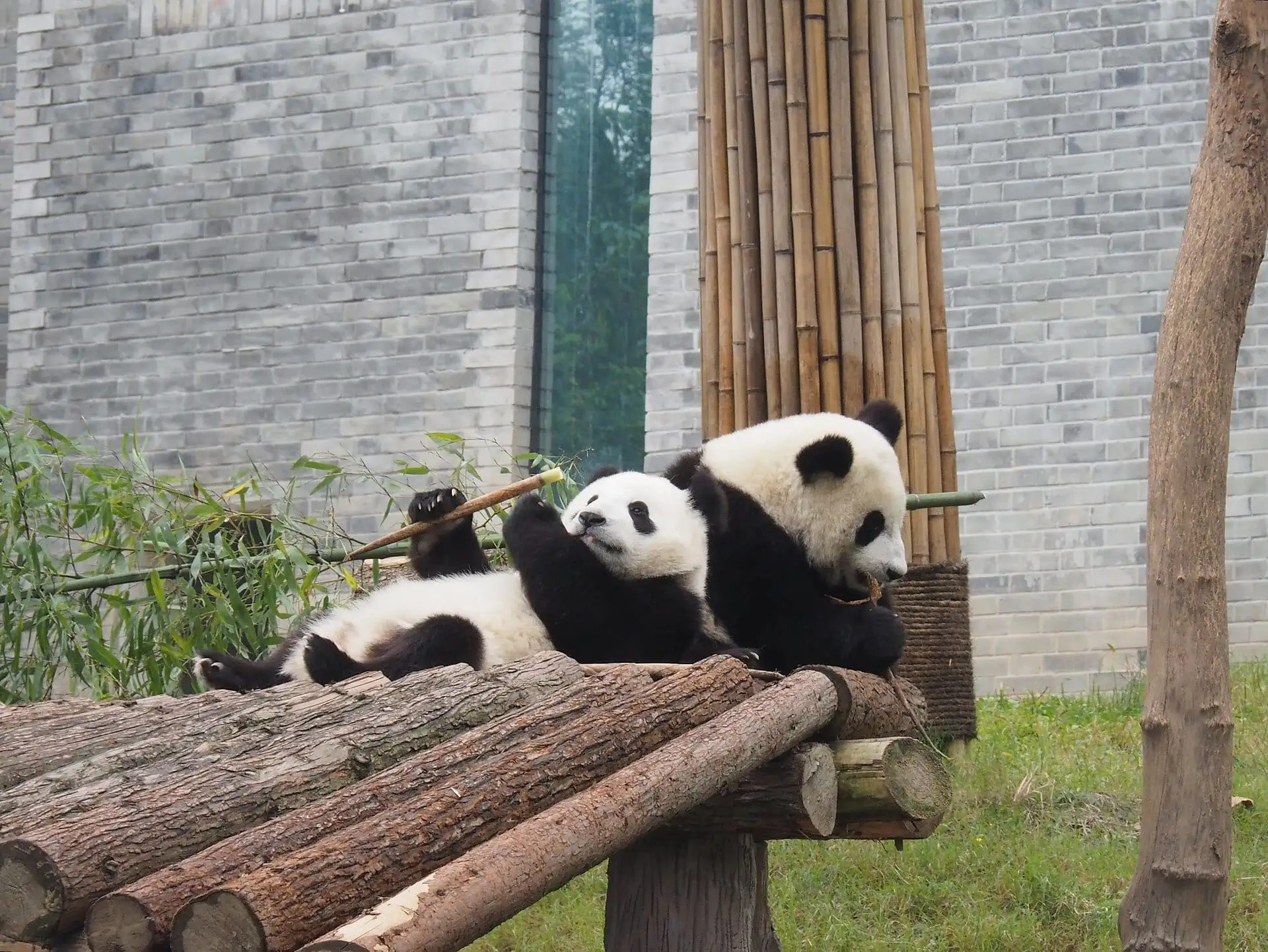
Seeing a giant panda is on most first-time visitors’ lists, and in China it’s easy. Most pandas live in Sichuan, around Chengdu, but you can also see them in Beijing, Shanghai, Chongqing, Guangzhou, Hong Kong and Macau. Here’s where to go, how to book, and when the pandas are actually awake.
The short version
| Where | From the nearest city | Price | Best for |
|---|---|---|---|
| Chengdu Panda Base | 30 minutes from central Chengdu | ¥55 | The most pandas, cubs, and the easiest trip |
| Dujiangyan Panda Valley | 1–1.5 hours from Chengdu | ¥55 | A quieter, more natural setting |
| Wolong Shenshuping | 2 hours from Chengdu | About ¥90 | Fu Bao, and mountain scenery |
| Bifengxia, Ya’an | 2 hours from Chengdu | About ¥100 | Fewer crowds; volunteer days |
| Beijing Zoo | Central Beijing | ¥15–19 | Pandas without a trip to Sichuan |
| Hong Kong Ocean Park | 15 minutes from Central | HK$538 | Six pandas, including young twins |
Go early in the morning, wherever you go. Pandas eat and move around from opening until about 10:00, then sleep through the middle of the day. Above about 26°C they’re often brought indoors.
Holding or hugging a panda isn’t possible anywhere any more. The paid “panda hug” photos ended around 2018–19, and volunteers can’t touch or feed the pandas either. Be wary of anyone selling one.
Chengdu Research Base of Giant Panda Breeding
The one most visitors go to, and for good reason: it’s close to the city, has more pandas than anywhere else, and the enclosures are set in bamboo forest and lakes.
- Price: ¥55 for adults, ¥27 for students. Free for children under 1.3 m and visitors aged 60 and over. The shuttle bus inside the park costs ¥30 and is worth it: the park is large.
- Book online with your passport, through the base’s WeChat mini-program or an app such as Trip.com. Morning and afternoon sessions sell out on weekends and holidays, so book a few days ahead. Bring the original passport to the gate. See how to book Chengdu Panda Base tickets.
- Hours: summer (16 March to 31 October), morning entry 7:30–12:00 and afternoon entry 12:00–17:00. In winter (from 1 November), morning entry from 8:00 and the last afternoon entry at 16:30.
- Cubs: the year’s cubs are usually on show from late summer. September to November is the best time to see them, in the Sun and Moon nursery houses.
- Hua Hua, China’s most famous panda, lives here. She isn’t on show on Mondays, except on public holidays, and the queue to see her can be over an hour.
- Getting there: metro Line 3 to Panda Avenue, then the shuttle bus to the gate, or a taxi from the centre (about ¥40, 25–30 minutes). The west gate leads into the newer part of the park, which is usually quieter.
Day-by-day plan: Chengdu in 2 days. Tours with transport and an English-speaking guide are on KKday and Klook.
Dujiangyan Panda Valley
Run by the Chengdu base, in the hills near Dujiangyan, where pandas are trained for release into the wild. It’s smaller and far quieter than the main base, with a separate red panda area.
- Price: ¥55, booked through the Panda Valley’s WeChat account up to 7 days ahead, with your passport.
- Hours: 7:30–18:00 in summer, 8:00–17:30 in winter.
- Getting there: the intercity train from Xipu (on the Chengdu metro) to Dujiangyan takes about 30 minutes, then a taxi for about 20 minutes. A taxi all the way from Chengdu costs about ¥150–200.
- Combine it with the Dujiangyan Irrigation System, an ancient waterworks nearby, or with Mount Qingcheng.
Don’t confuse it with the other Dujiangyan panda centre. The China Conservation and Research Centre’s Dujiangyan base, at Qingchengshan, where many volunteer programmes used to run, closed for renovation in April 2026. No reopening date had been announced when we checked.
Wolong: Shenshuping Panda Base
In the mountains of the Wolong nature reserve, about 100 km northwest of Chengdu. The scenery is wilder, and it’s the home of Fu Bao, the panda born in South Korea who became a star there before moving to China in 2024.
- Price: about ¥90 for adults, plus ¥20 for the shuttle bus from the visitor centre.
- Hours: about 8:40–17:00. The road can close after heavy rain, so check before you go in summer.
- Getting there: about 2 hours by car from Chengdu. A daily direct bus leaves Chengdu in the morning, but most foreign visitors come on a tour or with a hired car.
- Weekday mornings are best: Fu Bao’s enclosure is packed at weekends.
Bifengxia Panda Base, Ya’an
Inside the Bifengxia scenic area near Ya’an, about 150 km southwest of Chengdu. It has dozens of pandas, including several that came back from zoos abroad, and far fewer visitors than Chengdu.
- Price: about ¥100 for the scenic area, including the panda base and the shuttle. The safari park next door is a separate ticket, and doesn’t have the base’s pandas.
- Hours: the panda area is open about 9:00–11:30 and 13:30–16:00, with a break at midday when the pandas rest.
- Getting there: high-speed train from Chengdu South to Ya’an (about 1.5 hours), then a taxi (about 40 minutes).
Panda volunteer programmes
Want to spend a day with the keepers? Volunteer days now run at Bifengxia and Wolong Shenshuping: preparing bamboo, cleaning the enclosures, making panda bread, and a talk on conservation.
- Cost: about ¥700–1,000 at the base, including lunch, a uniform and a certificate. Agency day trips from Chengdu, with transport, cost about US$200–320.
- Places are limited, as few as 15 a day at Shenshuping. Book 1–2 months ahead for May to October.
- Age limits vary by base and programme, usually from about 10–12 up to 65–70, with under-18s accompanied by an adult.
- You’ll need a passport scan and a health declaration. You can’t take part with a cold or a fever.
- Volunteers don’t touch or feed the pandas.
Pandas outside Sichuan
| Where | Price | Good to know |
|---|---|---|
| Beijing Zoo | ¥15 entry, plus ¥5 for the panda house; less in winter | A new panda house opened in July 2026, with about 10 pandas including Meng Lan. Book with your passport through the zoo’s WeChat account |
| Shanghai Wild Animal Park | About ¥165–190 | In Pudong. Several pandas, including twins born in 2025 |
| Chongqing Zoo | ¥25 | One of the largest panda groups outside Sichuan; the panda house is right by the east gate |
| Chimelong Safari Park, Guangzhou | About ¥300–350, varies by date | Home of the world’s only surviving panda triplets, born in 2014 |
| Ocean Park, Hong Kong | HK$538 (less online) | Ying Ying, Le Le, their twins born in 2024, and An An and Ke Ke, given to Hong Kong in 2024 |
| Macau Giant Panda Pavilion | Free | Four pandas in Coloane. Closed on Mondays |
| Qinling Four Treasures Park, near Xi’an | ¥30 (¥20 in winter) | Qizai, the only brown-and-white panda in captivity. About 70 km from Xi’an; closed on Mondays |
Hangzhou has no pandas on show at the moment. Both of its panda homes closed in February 2026 and the pandas were moved back to Sichuan.
City guides: Beijing in 4 days, Shanghai in 3 days, Chongqing, Guangzhou and Shenzhen, Xi’an in 2 days and Hong Kong to the mainland.
When to go
- Time of day: from opening until about 10:00 is best, with a second, shorter active spell in mid-afternoon.
- Season: spring and autumn are the most comfortable for you; winter is when the pandas are most active and the crowds smallest. In July and August they spend much of the day in air-conditioned rooms.
- Cubs: most are born between June and September, and go on show a few months later. Visit in autumn to see them.
- Avoid the National Day holiday (1–7 October) and Chinese New Year, when tickets sell out. See the best time to visit China.
The rules
- No flash, no shouting, and nothing thrown or fed to the pandas. Visitors caught feeding them have been banned from the Chengdu bases for life.
- No drones, live-streaming setups or commercial filming without permission.
- Queues at the most popular pandas move in batches, often just a few minutes each.
Our pick
The Chengdu Panda Base, on a weekday, at 7:30. You’ll see more pandas in two hours than anywhere else in the world. Add Wolong or a volunteer day at Bifengxia if pandas are the main reason for your trip. Not going to Sichuan? The new panda house at Beijing Zoo or Ocean Park in Hong Kong are both easy half days. For a week-long route that includes Chengdu, see China in 7 days.