Getting Around
Hong Kong to mainland China: high-speed rail, border crossings, and entry rules
How to get from Hong Kong to Shenzhen, Guangzhou and beyond: high-speed trains from West Kowloon, the land crossings, the new 24-hour Huanggang port, and visa rules.
Many visitors start their China trip in Hong Kong: flights are plentiful, and the mainland is only a short ride away. Hong Kong has its own border and immigration, so going to Shenzhen or Guangzhou is a border crossing, not just a train ride. Here are your options, and the entry rules to check first.
Your options at a glance
| Route | Best for | Time |
|---|---|---|
| High-speed rail from West Kowloon | Guangzhou, Guilin, Beijing, Shanghai and 100+ other cities; Shenzhen Futian | 14 min to Futian, about 50 min to Guangzhou South |
| MTR to Lo Wu | Central Shenzhen (Luohu) | About 45 min from Kowloon, plus the crossing |
| MTR to Lok Ma Chau | Futian, Shenzhen’s business district | About 50 min from Admiralty, plus the crossing |
| Bus to Shenzhen Bay | Nanshan, Shekou, Shenzhen’s tech district | About 30–40 min from Yuen Long, plus the crossing |
| Bus to Huanggang (open 24 hours) | Late-night or early-morning crossings | Depends on route |
Option 1: high-speed rail from West Kowloon (easiest)
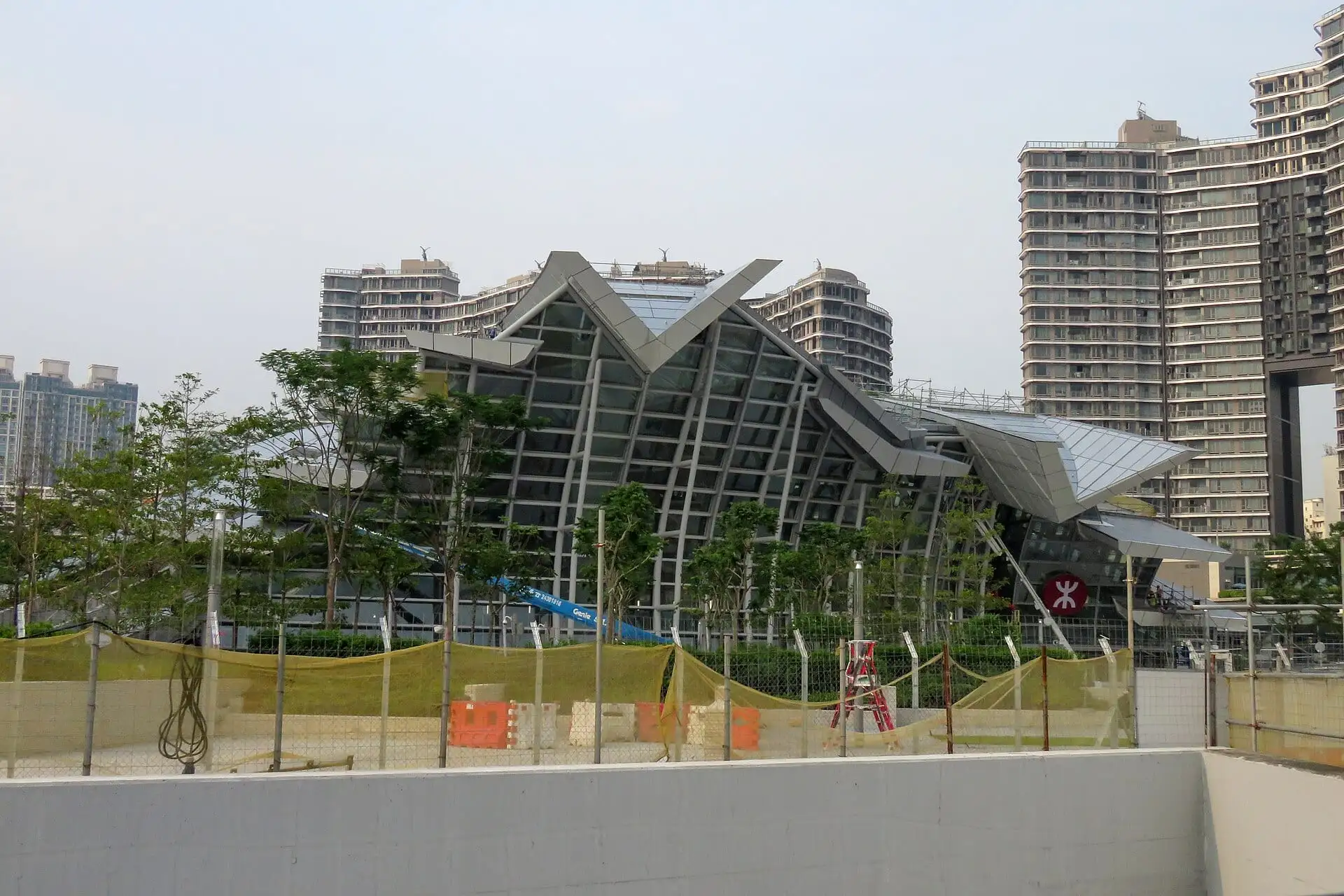
Hong Kong West Kowloon station has trains to more than 100 mainland cities. Both immigration checks happen inside the station before you board: you leave Hong Kong and enter the mainland in the same building, and step off the train at your destination like a domestic passenger.
- To Shenzhen Futian: 14–16 minutes, from about HK$80 in second class.
- To Guangzhou South: about 45–50 minutes, from about HK$215.
- Further: direct trains to cities such as Guilin, Changsha, Xiamen and Wuhan, and overnight sleeper trains to Shanghai Hongqiao (daily) and Beijing West (some days of the week) that leave about 8 pm and arrive around 7 am.
- Tickets go on sale 15 days ahead. Buy them on 12306 (which takes Visa and Mastercard), on Trip.com or Klook, or at the station counters, which take cash, cards and Octopus. You book with your passport.
- Arrive at least 60–90 minutes early. Check-in and immigration usually take 30–45 minutes, longer at busy times. Ticket checks stop 30 minutes before departure.
Fares are set in yuan and converted to Hong Kong dollars each month, so they change slightly. For train tips once you’re in the mainland, see booking high-speed trains.
Option 2: the land crossings into Shenzhen
Here you take the MTR or a bus to the border, walk through Hong Kong exit control, cross a bridge, then go through mainland entry control. It’s cheap, but it takes longer than the train, and queues can be long on weekends and holidays.
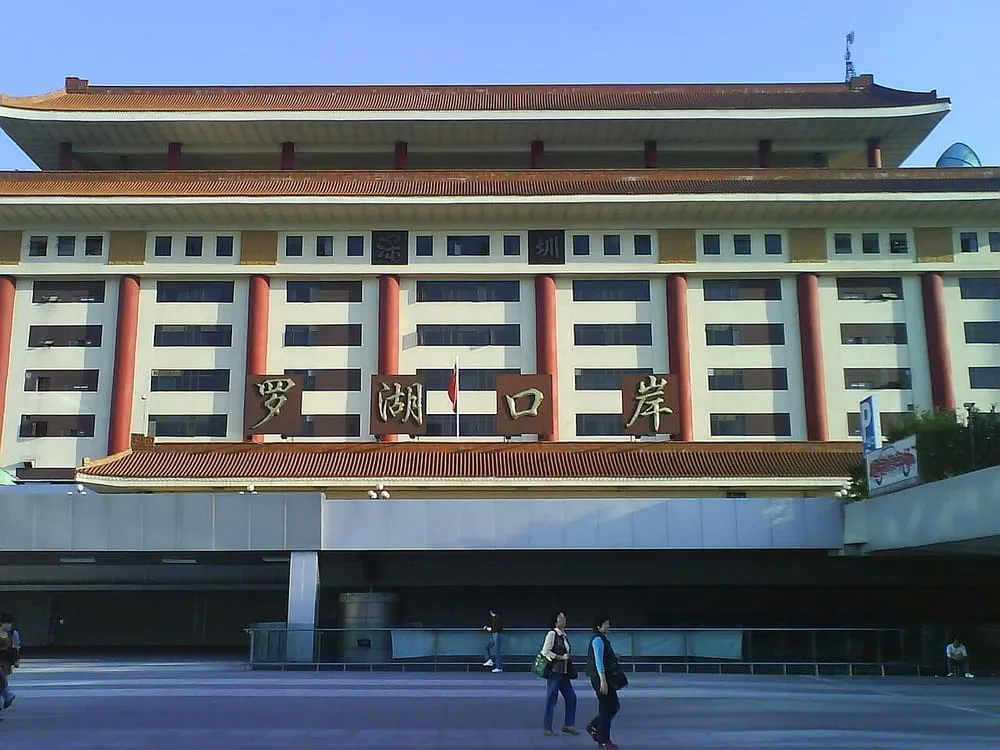
Luohu, the Shenzhen side of the Lo Wu crossing. From here you come out at Shenzhen Metro Line 1. Photo: Bourquie at English Wikipedia · CC BY-SA 3.0 · Wikimedia Commons
| Crossing | Open | How to get there |
|---|---|---|
| Lo Wu ↔ Luohu | 6:30–24:00 | MTR East Rail line to the last stop, Lo Wu. Comes out at Shenzhen Metro Line 1. |
| Lok Ma Chau ↔ Futian | 6:30–22:30 | MTR East Rail line to Lok Ma Chau (last train from Admiralty about 21:30). Comes out at Shenzhen Metro Lines 4 and 10. |
| Shenzhen Bay | 6:30–24:00 | Bus B2 from Yuen Long, B2P from Tin Shui Wai, or B3/B3X from Tuen Mun. Clear both sides in one building. |
| Heung Yuen Wai ↔ Liantang | 7:00–22:00 | Buses B7 from Sheung Shui, B8 from Tai Wai, or B9 from Tuen Mun. |
| Huanggang | 24 hours | Cross-border buses such as B10–B14, and 24-hour shuttle coaches from Mong Kok, Wan Chai, Kwun Tong and other districts (about HK$45–63). No MTR station. |
New in October 2026: the rebuilt Huanggang Port opened on 12 October 2026. It’s now the only land crossing open 24 hours, and you clear Hong Kong and mainland immigration in one building.
Other routes
- From Hong Kong airport, ferries go direct to Shekou (Shenzhen) in about 40 minutes, without entering Hong Kong. They’re for flight passengers only.
- To Zhuhai or Macau: shuttle buses run 24 hours across the Hong Kong–Zhuhai–Macao Bridge (HK$65 by day).
- The old intercity through-train from Hung Hom to Guangzhou no longer runs. Use the high-speed rail instead.
Entry rules: check before you go
Hong Kong’s visa-free rules don’t apply to the mainland. You need to qualify separately.
- 30-day visa-free entry: citizens of about 50 countries, including the UK, Canada, most of Europe, Australia, New Zealand and Japan, can enter for up to 30 days without a visa, currently until 31 December 2026. US citizens are not included.
- 240-hour visa-free transit: open to 57 countries, including the US. Since November 2025 you can use it at West Kowloon station and the Hong Kong–Zhuhai–Macao Bridge port. The catch: Hong Kong counts as a separate region, and the place you come from and the place you fly on to must be different. Hong Kong → mainland → back to Hong Kong doesn’t qualify. Hong Kong → mainland → Tokyo (or Macau) does.
- Shenzhen port visa: a short visa for Shenzhen only, issued at some crossings. Rules and eligible nationalities have changed often; don’t rely on it without checking with the border office first.
Full details: visa-free entry and 240-hour transit.
Arrival card: you can fill in the mainland arrival card online before you go, on the National Immigration Administration’s website (s.nia.gov.cn) or its app (how to fill it in). It’s free: ignore sites that charge for it. Paper cards are still available at the border.
Money and phone: set up before you cross
- Octopus doesn’t work in Shenzhen. Shenzhen Metro gates now accept contactless Visa, Mastercard, Apple Pay and Google Pay on every line. For everything else you need Alipay or WeChat Pay, and prices are in yuan (RMB), not Hong Kong dollars. See paying in China.
- Already have AlipayHK or MPay? Through Alipay+ they pay at mainland shops that take Alipay, in your own currency, without a mainland account. AlipayHK also has a cross-border ride code for Shenzhen’s metro and buses. Check the China option in your app before you cross: see paying with your home e-wallet.
- Mobile data: a Hong Kong SIM roaming in the mainland, or an eSIM bought before you go, usually keeps Google and WhatsApp working. A mainland SIM doesn’t.
Our pick
For Guangzhou or anywhere beyond Shenzhen, take the high-speed train from West Kowloon: one station, one immigration check, and you’re there in under an hour. For Shenzhen itself, choose the crossing nearest your hotel: Lok Ma Chau for Futian, Lo Wu for Luohu, Shenzhen Bay for Nanshan. Book your mainland hotel on Trip.com or Klook, and check it accepts foreign guests: see where to stay. What to see once you’re there: Guangzhou and Shenzhen in 3–4 days.