Cities
Guangzhou and Shenzhen in 3–4 days: dim sum, Canton Tower, and China's tech city
A 3–4 day plan for Guangzhou and Shenzhen: Cantonese morning tea, the Canton Tower and Pearl River, Shenzhen's parks and tech markets, plus trains between them.
Guangzhou (Canton) is the home of Cantonese food and one of China’s oldest trading cities. Shenzhen, half an hour away by high-speed train, grew from fishing villages into a city of 17 million in forty years, and is now China’s tech capital. Both are an easy trip from Hong Kong, and together they make a great 3–4 day add-on.
When to go
- Best: late October to December, and March–April. November is dry and mild, at about 15–24°C.
- Summer (May–September) is hot and humid, with heavy rain, and typhoons can disrupt travel from June to October.
- Watch for big events. During the Canton Fair (twice a year, mid-April to early May and mid-October to early November), Guangzhou hotel prices can be 2–4 times normal. In 2027 the spring session is expected around 15 April – 5 May, though it hadn’t been confirmed when we checked. Shenzhen hosts the APEC leaders’ meeting on 18–19 November 2026: expect extra security and full hotels that week.
Getting there and between the two
- From Hong Kong: high-speed trains from West Kowloon reach Shenzhen Futian in about 15 minutes and Guangzhou South in under an hour. See Hong Kong to mainland China.
- Guangzhou ↔ Shenzhen: about 200 high-speed trains a day run from Guangzhou South to Shenzhen North in 30–45 minutes, for about ¥75 in second class. Some go to Futian, closer to central Shenzhen. Book with your passport: see booking high-speed trains.
- Airports: Guangzhou Baiyun is about 45–60 minutes from the centre on Metro Line 3. Shenzhen Bao’an is about 30–35 minutes from Futian on Metro Line 11.
- Visa-free transit: both cities’ airports, and Hong Kong’s West Kowloon station, are among the ports for 240-hour visa-free transit. See visa-free entry.
Metro payments: both cities’ metros now accept contactless Visa, Mastercard, Amex and JCB: at all gates in Shenzhen since September 2026, and at gates showing the card logos in Guangzhou. Buses still need Alipay or WeChat Pay. See paying in China.
Guangzhou: 2 days
Day 1: morning tea and old Canton
- Morning: dim sum. Cantonese “morning tea” (早茶) is the essential Guangzhou experience: shrimp dumplings, char siu buns, rice rolls and endless tea. Famous restaurants such as Tao Tao Ju, Panxi and Guangzhou Restaurant cost about ¥80–150 per person. Expect a small tea charge per person, and a weekend surcharge at some. Go early, before 9:00, or queue.
- Late morning: Chen Clan Ancestral Hall (陈家祠), a 19th-century family temple covered in astonishing carvings. About ¥10. It’s closed on Tuesdays, and booking ahead with your passport may be needed.
- Afternoon: Yongqingfang and Shamian Island. Wander the restored lanes of Yongqingfang in Liwan, with Bruce Lee’s ancestral home, then walk to Shamian Island, a quiet island of colonial-era buildings and banyan trees. Both are free.
- Evening: Beijing Road, a busy pedestrian shopping street, then dinner.
Day 2: Canton Tower and the Pearl River
- Morning: Yuexiu Park, a big hilly park with the Five Rams statue, the symbol of the city. Free.
- Afternoon: Guangzhou’s new centre, Zhujiang New Town, with modern architecture along the river.
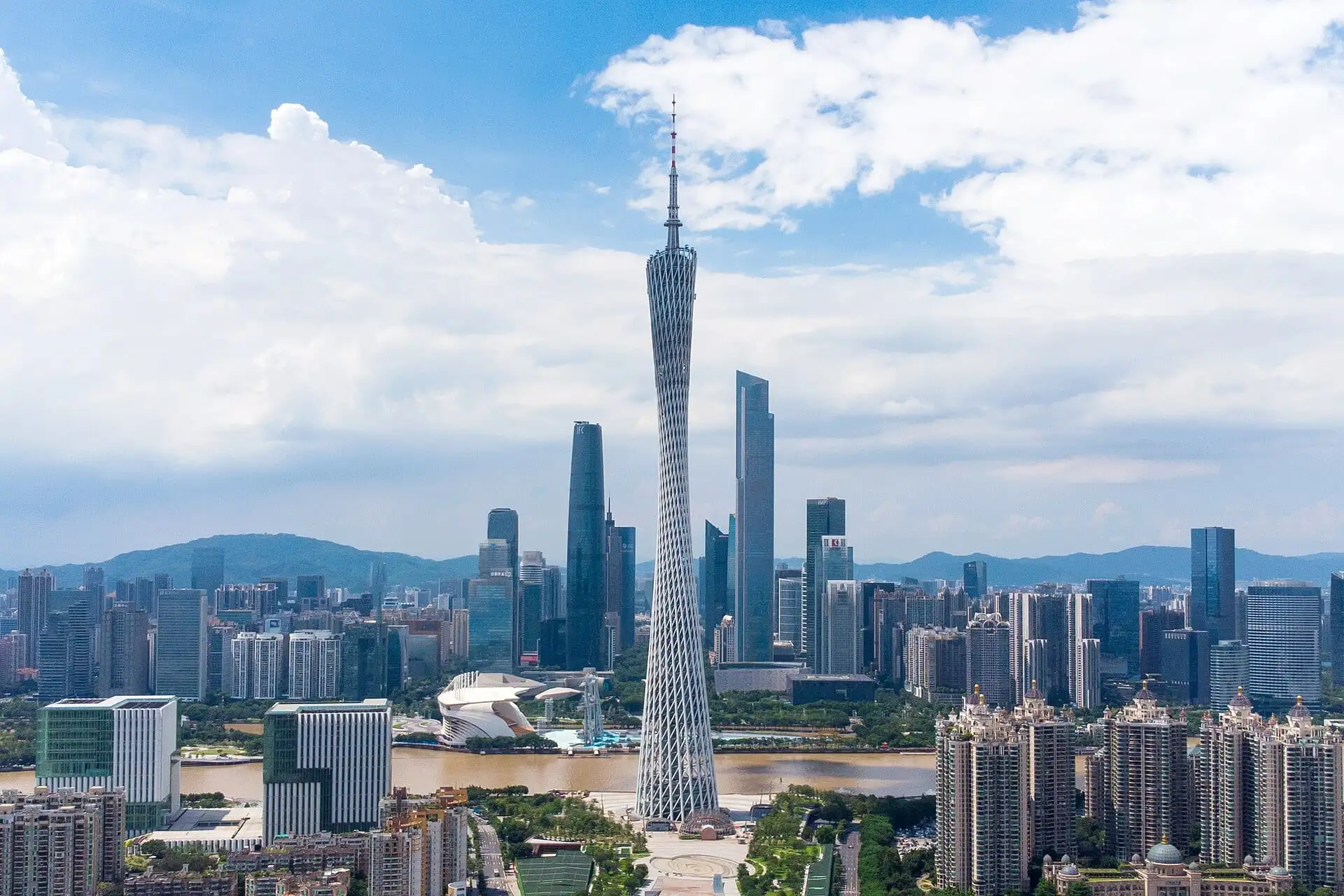
- Sunset: the Canton Tower. The observation decks at about 430–450 m cost from ¥150, with higher decks and rides costing more. Tickets are in your name: book with your passport details and bring the passport.
- Evening: a Pearl River night cruise, 60–80 minutes past the lit-up skyline, from roughly ¥80–220 depending on the pier and boat. Sailings run from about 18:40 to 22:00. Book on Klook or at the pier.
With children: Chimelong Safari Park is one of China’s best zoos, at about ¥300.
Shenzhen: 1–2 days
Shenzhen has few old sights. Come for the modern city, the parks along the bay, and the gadgets.
- Lianhuashan Park (Lotus Hill): climb to the top for the view over Futian’s skyscrapers. Free.
- Ping An Finance Centre “Free Sky”: the observation deck on one of China’s tallest buildings, about ¥180–200.
- Huaqiangbei: the world’s biggest electronics market, floors of stalls selling everything from phone parts to drones. Stalls take Alipay, WeChat Pay or cash, not foreign cards.
- OCT Loft: old factories turned into galleries, cafés and design shops.
- Shenzhen Bay Park and Talent Park: waterfront parks for an evening walk, with views towards Hong Kong. Free.
- Sea World, Shekou: a lively waterfront plaza around an old cruise ship, with a fountain show in the evening.
- Theme parks: Window of the World (miniature world landmarks) and Splendid China Folk Village (about ¥220 each) are popular with families.
- Dafen Oil Painting Village: a neighbourhood of studios painting copies of famous works. Good for a quirky souvenir.
- Dameisha Beach: a free city beach in the east of Shenzhen.
Robotaxis: driverless taxis from Baidu’s Apollo Go and Pony.ai now run in parts of Shenzhen, including Nanshan. Some visitors book them through the Amap app’s English ride-hailing, but access for foreign users is patchy.
Where to stay
- Guangzhou: Tianhe (modern, near the metro and Canton Tower) or Yuexiu (older, close to the historic sights). Avoid Pazhou during the Canton Fair unless you’re attending it.
- Shenzhen: Futian (central, near the high-speed station and the Hong Kong border) or Nanshan (by the bay, near Shekou and the tech district).
Book on Trip.com or Klook, and check the hotel accepts foreign guests: see where to stay.