Planning
Chinese New Year 2027 in China: 6 February, the 9-day holiday, crowds, and what's open
Chinese New Year 2027 is Saturday 6 February. The official 9-day holiday (5–13 February), the travel rush, what closes, when train tickets go on sale, and when to go.
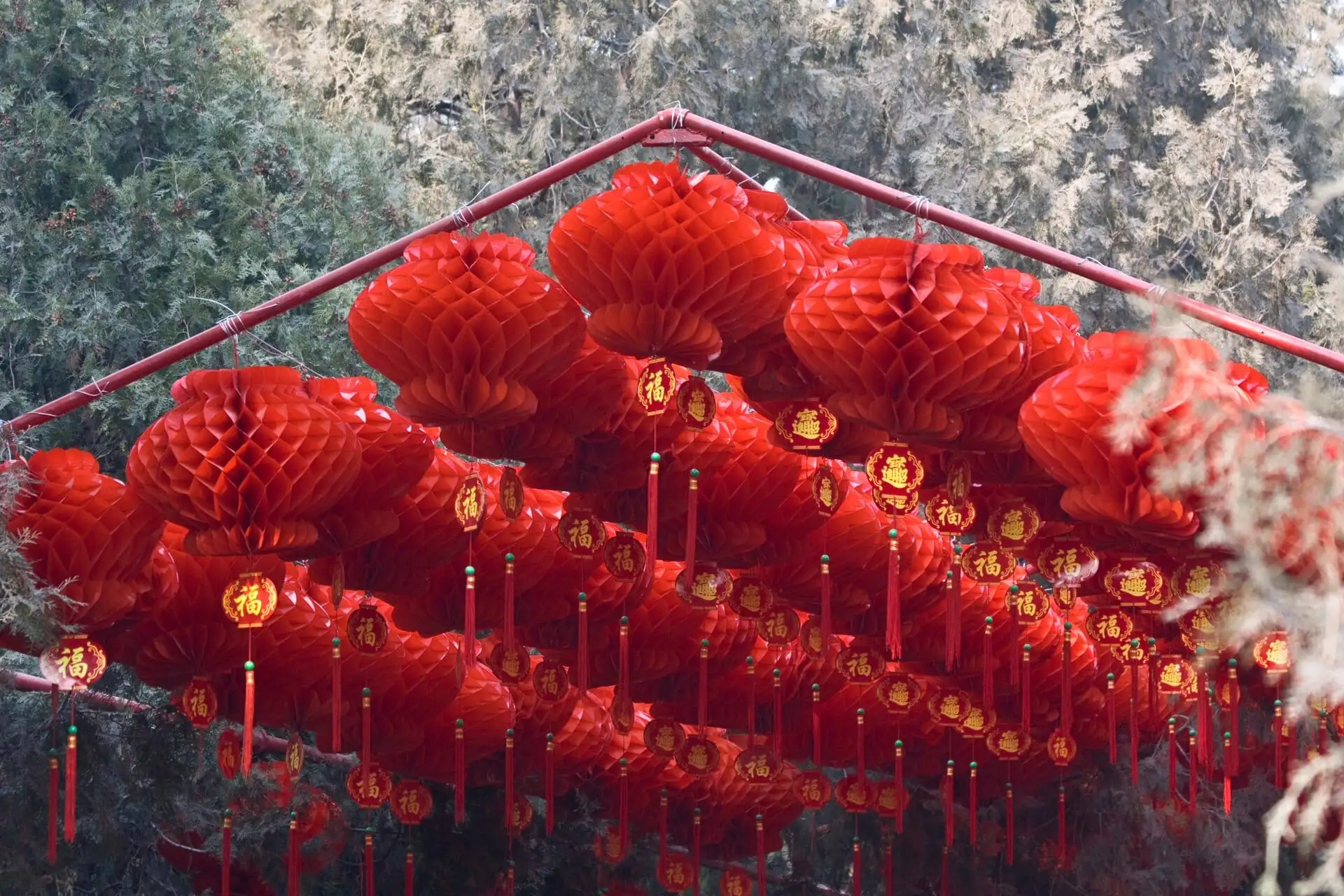
Chinese New Year (the Spring Festival, 春节) is China’s biggest holiday, and since 2024 it’s on UNESCO’s list of intangible cultural heritage. Streets fill with red lanterns, Beijing’s parks hold temple fairs, and families gather from all over the country. It’s a memorable time to visit, and the hardest time to travel. Here’s how to do it well.
The short answer
- Chinese New Year 2027 is on Saturday 6 February, the start of the Year of the Goat (also called the Year of the Sheep). New Year’s Eve, the big family night, is Friday 5 February.
- The official holiday is 9 days, Friday 5 to Saturday 13 February. Sunday 31 January and Sunday 14 February are working days to make up for it.
- Avoid moving between cities from about 30 January to 14 February. Trains, flights, and hotels are at their busiest and most expensive.
- Stay put in Beijing or Shanghai over the first days to see the celebrations, or arrive from about 14 February for lower prices with the lanterns still up.
Key dates for 2027
| Date | |
|---|---|
| New Year’s Eve (除夕) | Friday 5 February 2027 |
| Chinese New Year’s Day | Saturday 6 February 2027, the start of the Year of the Goat |
| Official holiday | Friday 5 – Saturday 13 February 2027, 9 days |
| Make-up working days | Sunday 31 January and Sunday 14 February 2027 |
| Lantern Festival (元宵节), the last day of celebrations | Saturday 20 February 2027 |
| Travel rush (春运, chunyun) | Expected around 22 January – 2 March 2027 |
The public holiday. Since 2025 the law gives four days off: New Year’s Eve and the first three days of the year, Friday 5 to Monday 8 February in 2027. The State Council’s schedule, published on 5 November 2026, adds weekends and swapped days to make 9 days off, from Friday 5 to Saturday 13 February (in 2026 it was also 9 days, 15–23 February). In return, Sunday 31 January and Sunday 14 February are normal working days: offices, banks and schools open as on a weekday. The other holidays of the year: China public holidays 2027.
The travel rush. Chunyun is a 40-day travel season around the holiday. In 2026 it ran 2 February – 13 March and saw a record 9.4 billion trips, including 540 million by train. The dates above for 2027 are our estimate, based on the same pattern.
What’s open and what’s closed
- Big sights stay open, and get very busy. In Beijing, the Forbidden City closed on New Year’s Eve in 2026 and opened through the rest of the holiday. Book tickets the moment they’re released; see the Beijing guide.
- Shops and restaurants: in big cities, malls, chain restaurants and convenience stores stay open. Small family-run restaurants and shops often close for the first three to five days, longer in small towns. In the countryside almost everything shuts on New Year’s Eve and New Year’s Day.
- Banks and government offices close for the official holiday. Cash machines keep working. If you need to sort out anything official, such as a visa extension, do it before or after.
- New Year’s Eve itself is a family night. Many restaurants close early or only serve pre-booked family dinners. Book a table ahead, or plan a hotel restaurant dinner.
Things worth seeing
- Beijing temple fairs (庙会): food stalls, folk performances and lanterns in parks such as Ditan (Temple of Earth) and Longtan. In 2026 they ran from New Year’s Day for a week, 8:30–17:00, at about ¥30 a ticket.
- Yuyuan Garden lantern show, Shanghai: a huge lantern display that runs for weeks until the Lantern Festival. In 2026 it was about ¥80 with timed entry. Go on a weekday evening. See Yu Garden tickets.
- Lantern Festival (20 February 2027): lantern displays and tangyuan (sweet rice dumplings) everywhere. It’s the last day of celebrations, and the crowds have gone home by then.
- Harbin Ice and Snow World: Chinese New Year falls in the festival season. See the Harbin guide.
- Fireworks: central Beijing bans them, as do many other city centres, so the famous midnight barrage is mostly a small-town and countryside sight now.

The Yuyuan Garden lantern show in Shanghai runs for weeks until the Lantern Festival. Go on a weekday evening. Photo: Augusthaiho · CC BY-SA 4.0 · Wikimedia Commons
Getting train tickets
China’s railway (12306) sells tickets 15 days ahead, and the same applies during the travel rush. For popular routes at peak dates, tickets can sell out within minutes of release.
- Book the moment sales open: 15 days before, counting the travel day. For example, tickets for 2 February 2026 went on sale on 19 January. For 2027, that works out as follows.
| If you travel on | Tickets go on sale |
|---|---|
| Saturday 30 January | Saturday 16 January |
| Wednesday 3 February | Wednesday 20 January |
| Friday 5 February (New Year’s Eve) | Friday 22 January |
| Sunday 7 February | Sunday 24 January |
| Wednesday 10 February | Wednesday 27 January |
| Saturday 13 February | Saturday 30 January |
| Sunday 14 February | Sunday 31 January |
Sales open in batches during the day, at times that depend on the station. Check the 12306 app the day before your sale date and be ready when it opens.
- Use the waitlist (候补) on the 12306 app. It queues you for up to 3 dates and 60 trains, and you’re only charged if a ticket comes through.
- Travel against the flow. Days before New Year, trains leaving big cities are packed while trains into them are quiet. After the holiday it’s the reverse.
- How to register and book with a passport: see booking high-speed trains. You can also book in English on Trip.com or Klook.
When to go: our advice
- Best value: arrive just after the holiday (around 14–20 February 2027). The holiday crowds have gone home, prices drop, and lanterns are still up until the Lantern Festival. After the 2026 holiday, hotel prices in popular cities fell 30–45% and some flights dropped by more than half.
- To see the celebrations: stay in one big city (Beijing or Shanghai) over New Year’s Eve and the first days. Get there a few days before the rush peaks, then don’t move around. Book your hotel weeks ahead on Trip.com or Klook.
- Avoid travelling on the last two days of the holiday (12 and 13 February 2027), when everyone heads home at once. In 2026 the busiest day was the sixth day of the holiday, with about 380 million trips in a single day.
China is getting more popular with foreign visitors over the holiday: over the 2026 Spring Festival, 460,000 foreigners entered without a visa, up 28% on the year before. Check whether you can too: see visa-free entry. For the rest of the year, see the best time to visit China.