Entry & Visas
How to apply for a China tourist visa (L visa): forms, documents, fees, and timing
Who still needs a China tourist visa, and how to apply: the online form, documents, photo rules, fees in the US, UK, Canada and Australia, timing, and Hong Kong.
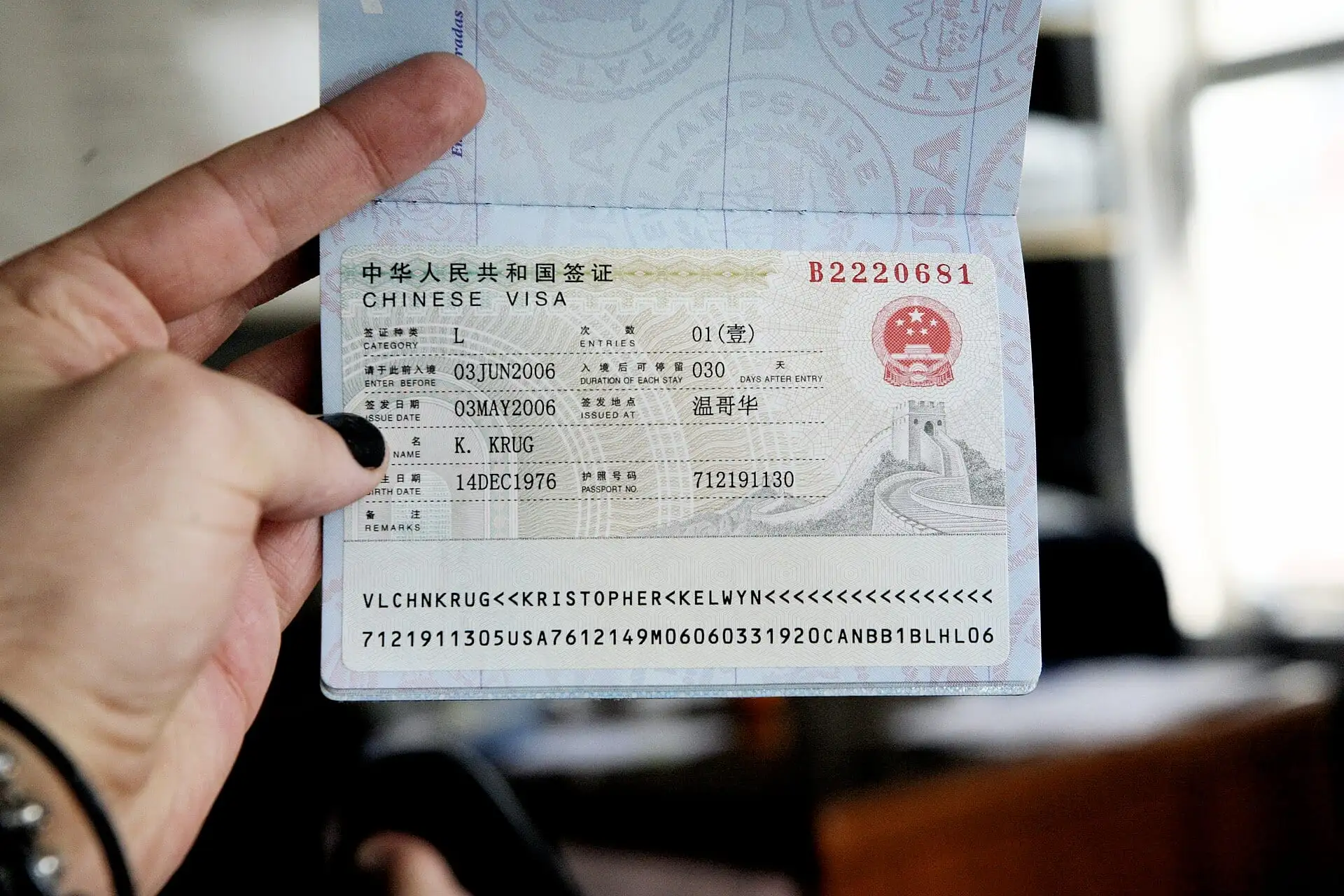
Many travellers don’t need a visa for China any more: around 50 countries can visit for up to 30 days without one, and 57 can use the 240-hour transit rule. But if your passport isn’t on those lists, or you want to stay longer, you need a tourist visa, called the L visa. Here’s how the application works, what it costs, and how long to allow.
Check first. The fee cut and the fingerprint exemption described below currently run until 31 December 2026, as does visa-free entry for most countries. They have usually been extended, but check the Chinese embassy in your country before you apply.
Do you need a visa?
| Your situation | What you need |
|---|---|
| Passport from a 30-day visa-free country (most of Europe, the UK, Canada, Australia, New Zealand, Japan, South Korea, and others), staying 30 days or less | No visa |
| Passport from one of 57 transit countries (including the US), flying on to a third country, staying up to 10 days | No visa, on the 240-hour transit |
| Staying longer than 30 days, or not on either list (for example India) | L visa |
| A US citizen on a round trip, or staying more than 10 days | L visa: see China for US citizens |
| Work, study, or journalism | A different visa (Z, X, or J), not covered here |
How it works
The process is the same almost everywhere:
- Fill in the online form. Applications start on the Ministry of Foreign Affairs’ online visa system (COVA). You enter your details, upload your documents and photo, and submit for an online pre-check.
- Wait for the pre-check. The status changes when your documents are accepted, usually within about a week. You may be asked to fix something. Passing the pre-check doesn’t guarantee the visa.
- Hand in your passport. Take your passport, the printed confirmation page with its barcode, and your original documents to the embassy, consulate, or Chinese Visa Application Service Center for where you live.
- Collect your passport with the visa inside, once the status says it’s ready.
You can usually only apply for a trip within the next 90 days (the US system says so explicitly), so don’t start too early. Uploads must be images: the system doesn’t accept PDFs.
Documents
- Passport valid for more than 6 months, with at least 2 blank visa pages. For a 10-year visa, the US embassy asks for at least a year of validity.
- Photo: colour, taken within 6 months, on a white or off-white background, no hat. For the upload: 354×472 to 420×560 pixels, JPEG, 40 to 120 KB. Glasses are allowed only with clear lenses, no glare, and frames that don’t cover the eyes. Many applications are delayed by the photo, so follow the rules exactly.
- Proof you live there, if you’re applying outside your own country: a residence permit or visa. In the US, every applicant also uploads proof of address in the consulate’s district, such as a driver’s licence or a utility bill.
- Travel plans:
- US: since January 2024, you don’t need flights, hotel bookings, an itinerary, or an invitation letter.
- UK, Hong Kong and most other places: you still need return flight and hotel bookings, or an invitation letter from someone in China.
- Former Chinese citizens: on your first application after naturalising, bring your last Chinese passport and proof of your new nationality. This is a common reason for delays.
Fees
China cut its visa fees by about 25% until 31 December 2026. The cut applies to the visa fee only, not to express service or the visa centre’s own service fee.
| Applying in | For | Total cost |
|---|---|---|
| United States | US citizens, any number of entries (including 10-year visas) | $140, plus $25 for express |
| United Kingdom | UK citizens, up to 2 years | £130 regular, £161 express, £182 rush |
| United Kingdom | UK citizens, 5-year / 10-year | £194 / £257 |
| Canada (Montreal centre) | Canadian citizens | C$138.24 regular, more for express |
| Australia (Sydney centre) | Australian citizens, single entry | A$94.50 regular |
- UK, Canadian and Australian prices include the visa centre’s service fee. In the US you pay the embassy directly; there are no visa centres.
- Prices for other nationalities differ, often by a lot. US citizens applying in the UK pay £179, for example. Each visa centre’s website has a full fee table.
- UK, Canadian and Australian citizens can visit for up to 30 days visa-free, so they only need a visa for longer trips.
Timing
| Where | Regular | Express | Rush |
|---|---|---|---|
| US embassy and consulates | 4 working days | 3 working days | not offered |
| UK visa centres (London) | about 4 working days | about 3 | about 2 |
| Australia, Canada | similar; check your centre |
The days are counted from when you hand in your passport, not from the online form. Add about a week for the pre-check and allow 3 to 4 weeks in total to be safe. Some applications take longer.
Where to apply
- United States: at the Chinese Embassy in Washington DC or the consulates in New York, Chicago, San Francisco or Los Angeles, depending on your state. No appointment is needed. There’s no postal service, but a friend or visa agent can hand in and collect your passport for you.
- UK, Canada, Australia and most other countries: at a Chinese Visa Application Service Center (visaforchina.cn lists them). In the UK, no appointment is needed once your pre-check is done, and you can have your passport posted back. In Australia, only the Sydney and Melbourne centres are still open, according to travel sites.
- Hong Kong: foreigners with ordinary passports apply at the Chinese Visa Application Service Center in Wan Chai, not at the Commissioner’s Office. Visitors can apply there too: bring your Hong Kong landing slip, plus flight and hotel bookings. There’s no postal service. See Hong Kong to mainland China.
You normally apply where you live. If you’re visiting another country, check with its visa centre first.
Fingerprints
Until 31 December 2026, applicants for short-stay visas (180 days or less, including the L visa) don’t need to give fingerprints. After that, the usual exemptions are: under 14 or over 70, and anyone who gave fingerprints with the same passport in the last 5 years. You’ll still have your fingerprints taken at the border when you arrive (ages 14 to 70).
How long you can stay
The consular officer decides the number of entries, how long the visa is valid, and how long each stay can be.
- US citizens can get a 10-year multiple-entry L visa; stays are usually up to 60 days each, but check what’s printed on your visa.
- Others often get a single or double-entry visa, though multiple-entry visas are possible. The length of each stay is printed on the visa.
If you need longer once you’re in China, you can apply to extend an L visa at a local public security exit-entry office.
Reasons for refusal or delay
China doesn’t have to give a reason for refusing a visa. The common problems are practical:
- a photo that doesn’t meet the rules,
- missing documents (proof of address, or an old Chinese passport for former citizens),
- a passport with too little validity or too few blank pages,
- inconsistent details between the form and the bookings.
Tibet: foreigners need a separate Tibet Travel Permit, arranged by a travel agency, on top of the visa. Read the Tibet permit guide before you plan that part of the trip.
Visa on arrival: China has port visas at some airports, but only for urgent reasons, such as a family emergency or urgent business, and they should be arranged in advance. They aren’t an option for ordinary tourists.
Once you have the visa
Fill in the arrival card online a few days before you fly, set up mobile payments, and sort out internet access before you land.